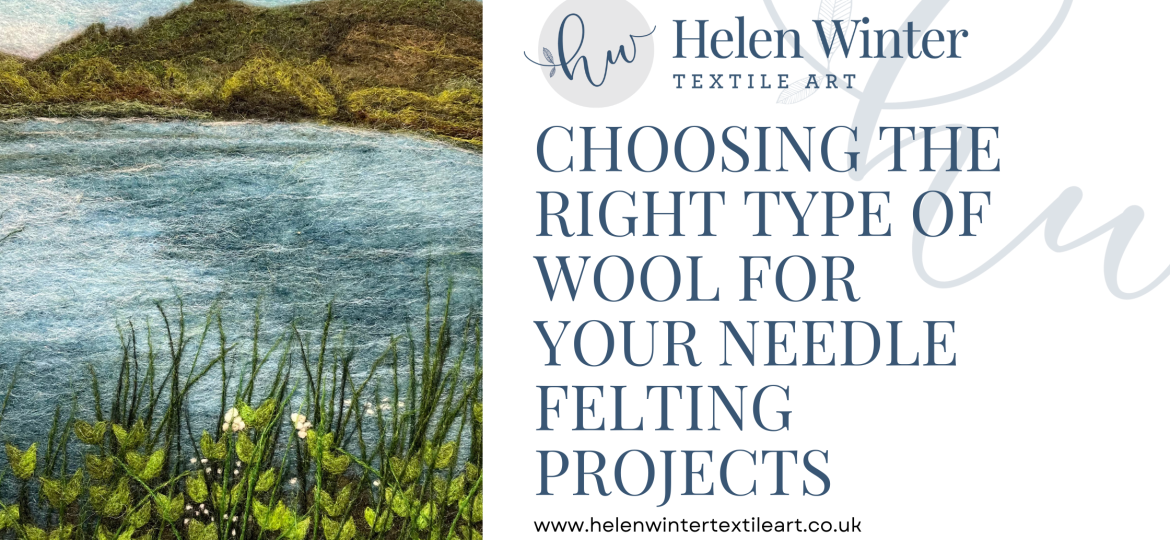
What is the best wool for when your choosing the right type of wool for your needle felting projects? The best wool for needle felting projects depends on your desired outcome. Merino wool is great for smooth finishes, Corriedale provides a balance of structure and softness, and coarse wools like Bergschaf or Romney work well for building strong foundations. Blending different wool types can enhance your felting experience, making projects easier and more realistic.
But before you get going why not download my FREE guide to Blending and Creating Your Own Wool Colours, perfect for when you can’t find the right colour for your work of art.

Introduction Choosing the Right Type of Wool for Your Needle Felting Projects
When starting a new needle felting project, one of the most important decisions you’ll make is choosing the right type of wool. The type of wool you use impacts how easily your project felts, the texture of the finished piece, and the overall quality of your work. With so many options available, it can be overwhelming to know which wool works best for different applications. In this blog, I’ll walk you through the different types of wool, their uses, and how to make the best choice for your needle felting projects.
Choose the Right Type of Wool For Your Needle Felting Project
The first step in achieving even felting is selecting the right type of wool. Different wool fibres vary in thickness and felting properties. Fine wool, such as Merino, is ideal for achieving a smooth finish due to its softness and ability to felt easily. It allows for better control and compaction, resulting in more even felting. Experiment with different wool types to find the one that works best for your felting style and project. Consider factors such as fibre length, texture, and colour as well.
The advice and tips in this blog are based on my own experience through trial and error. As you gain skill and experience, you’ll likely develop your own wool preferences for different projects.

Choosing the Right Materials
Not all wool is the same, and recommendations can be confusing. I generally use one or two types of wool to create a wide range of projects. After reading this blog, I suggest experimenting to find a couple of wool types that work best for you.
Different wool fibres react differently to the felting needle, so it’s important to understand how they behave before purchasing. Many people recommend wool roving for needle felting projects, but before I share my opinion, here’s a brief explanation of what it is.
Wool roving consists of long, thick strands of fibre, usually from sheep’s wool but sometimes blended with silk, alpaca, or other materials. It is cleaned, carded, and prepared for use, with fibres arranged in parallel. While great for spinning, it’s not always the best option for needle felting projects.
Wool Types and Their Best Uses
Different wool types serve different purposes. Here’s a breakdown of popular choices:
• Merino Wool: Soft and fine, ideal for achieving smooth surfaces and details. Felts quickly but may not be great for structural elements.
• Corriedale Wool: Medium-fine wool that balances softness and structure. Good for shaping and outer layers with visible details.
• Romney Wool: Coarser fibres that hold shape well. Great for core structures and realistic textures in animal sculptures.
• Bergschaf Wool: Coarse and durable, felts quickly. Ideal for firm, sturdy pieces that need to hold shape.
• Leicester Longwool: Long, lustrous fibres perfect for realistic animal fur or hair details.
• Alpaca Wool: Silky and soft with a luxurious feel, available in a variety of natural shades.
Blending Fibres
Blending different types of wool can enhance your needle felting projects by combining the best properties of each fibre. For example, mixing Merino (for softness) with Corriedale (for structure) creates a medium that’s easy to felt while holding shape well.
Blending can also be used for colour effects. If you can’t find the exact shade you need, blend different-coloured wool fibres. To do this, layer small amounts of different colours, pull apart, restack, and repeat until well mixed. Use blending brushes, dog brushes, or your hands to create smooth transitions and subtle variations that enhance realism.
You can download my FREE guide to Blending and Creating Your Own Wool Colours here.
Other Considerations
• Wool Length and Crimp: Longer fibres can be harder to felt but are useful for hair or fur effects. More crimped wools interlock faster during felting.
• Natural vs. Dyed Wool: Natural wools retain their softness and crimp, while dyed wools offer more colour variety but may alter texture.
• Wool Microns: Wool fineness is measured in microns. Fine wools like Merino have lower microns, while coarser wools are higher. For general needle felting projects, a mid-range micron count (23-25 mic) is ideal.
Practical Application When Choosing the Right Type of Wool for Your Needle Felting Projects
Many beginners start with Merino wool roving, but it’s not the best choice for learning because it’s too fine and doesn’t felt easily. It’s excellent for replicating fur in pet portraits or adding a smooth finish but can be difficult for building shapes.
My personal preference for most needle felting projects is carded wool sliver. This type of wool has fibres arranged in a more random, crisscross pattern, making it easier to felt together. It felts quickly, making the entire process more enjoyable.
You may also encounter the term core wool, which refers to the wool used as the foundation of a project. Core wool is often medium to coarse and serves as the base layer before adding finer or coloured wool on top. For larger projects, using core wool is cost-effective and helps bulk out shapes efficiently.
However, not every project requires core wool. Smaller projects, like pumpkins or tiny animals, can be made entirely from medium or coarse wool like Corriedale. These types of wool felt well on their own without needing an underlying base.
For larger needle felting projects, core wool is useful for building the base shape before applying coloured wool. When creating 3D dog and animal sculptures, I use core wool for the body and head before layering on the final coat. For smaller items, like mushrooms or tiny animals, I use carded wool slivers in the same colour throughout, as they are easy to work with and cost-effective.

Conclusion To Choosing the Right Type of Wool for Your Needle Felting Projects
When selecting wool for your needle felting projects, think about the structure, texture, and details you want to achieve. Choose a base wool for shape, layer with finer wool for detail, and use specialty fibres for effects like gloss or coarseness. Testing small samples before starting a full project can help you determine the best combination for your needs.
By understanding and choosing the right wool, you’ll improve the quality, realism, and ease of your felting process, making each piece come to life with stunning detail and don’t forget to download my FREE Blending and Creating Your Own Wool Colours Here
Create Beautiful Needle Felted Landscapes Book

If you love capturing nature in wool, my book Create Beautiful Needle Felted Landscapes is a great guide! It walks you through six stunning landscape projects with step-by-step instructions, expert tips, and techniques to create depth, texture, and realism.
📖 Create Beautiful Needle Felted Landscapes is now available on Amazon. Grab your copy here. If you have trouble accessing the book, search for it on your country’s Amazon domain.